

How to establish a Family Foundation in UAE?
Understand how to setup a Family Foundation in UAE with FTA-approved tax-transparent status, the rules under Article 17, asset transfer requirements, and the best structures for safeguarding and passing on family wealth.
-
UAE Family Foundations preserve long-term wealth
They centralize asset control, protect family wealth, and secure smooth multigenerational succession. -
Tax transparency requires FTA approval
A foundation qualifies as tax-transparent only when it meets Article 17 criteria and receives Federal Tax Authority approval. -
Foundations can hold passive assets only
They can own shares in operating companies but cannot run active business operations. -
Flexible structuring supports complex family needs
Families can use holding companies or multiple SPVs to isolate risk, manage global assets, and streamline inheritance. -
Compliance and clear beneficiary rules are mandatory
Foundations must identify beneficiaries, follow defined distribution rules, maintain substance, and meet annual compliance obligations.







Table of Content
- What is a Family Foundation?
- Why Families and Individuals use Foundations in UAE
- What are the eligibility criteria for setting up a family foundation in the UAE?
- How to Structure a Family Foundation in the UAE
- Benefits of Using a Family Foundation
- Limitations and Considerations
- How Assets Are Transferred into a Foundation
- Taxation of Family Foundations in the UAE
- How Can Juriszone Help You Set Up a Family Foundation?
What is a Family Foundation?
A family foundation in the UAE is a type of private foundation and a regulated legal structure designed for multi generation wealth management, asset protection, and succession planning. It allows a family or individual to transfer real estate, investments, and other assets into a single vehicle that operates with clear governance and distribution rules. The foundation can also support charitable activities and may access favourable tax treatment when approved under UAE Corporate Tax Law.
Families evaluating different jurisdictions in the UAE often compare foundation structures across the main free zones. Options such as the DIFC foundation setup, RAK ICC family foundation, and ADGM foundation formation provide flexible, common-law-based frameworks that support long-term wealth preservation, governance, and succession planning.”
Why Families and Individuals use Foundations in UAE
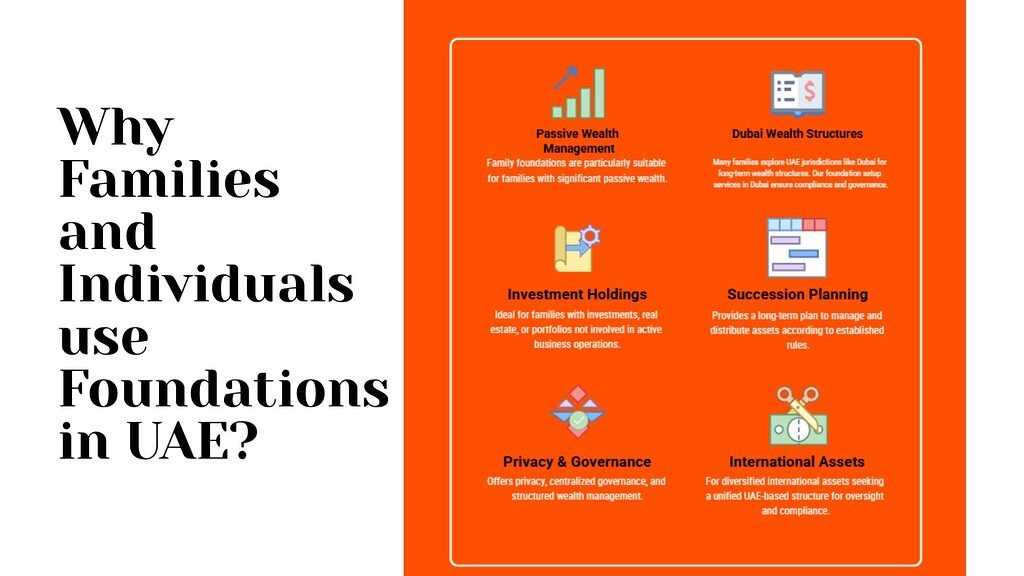
Family foundations are particularly suitable for families with significant passive wealth.
Many families also explore UAE jurisdictions, such as Dubai, when setting up long-term wealth structures, and our comprehensive foundation setup services in Dubai help them establish a compliant and well-governed family foundation.
- Families with investments, real estate holdings, or portfolios that are not involved in active business operations.
- Families seeking a long-term succession plan to ensure assets are managed and distributed according to established rules.
- Families that value privacy, centralized governance, and structured wealth management.
- Families holding diversified international assets and seeking a unified UAE-based structure for oversight and compliance.
- Families seeking tax efficiency in accordance with UAE corporate tax laws.
What are the eligibility criteria for setting up a family foundation in the UAE?
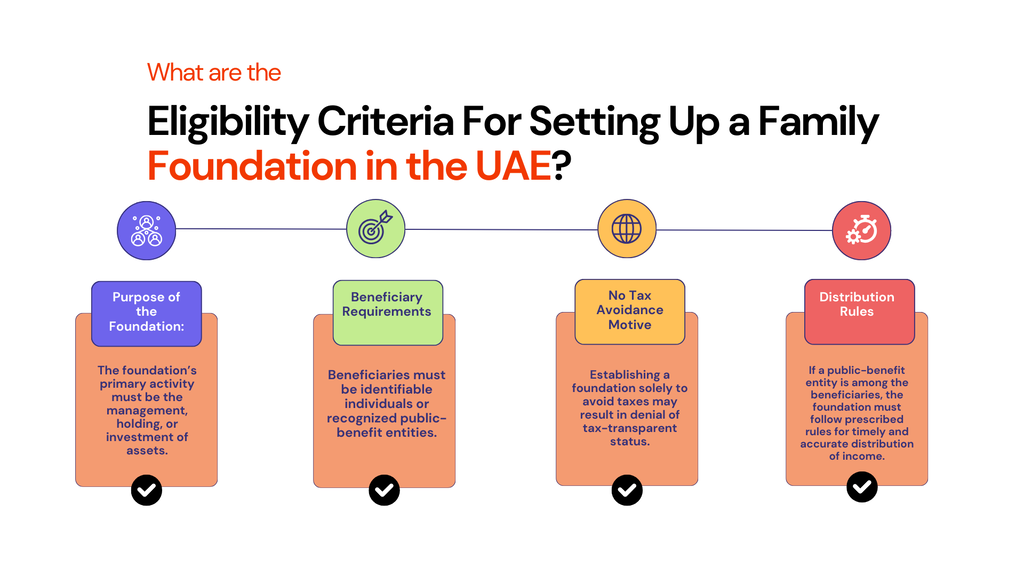
Not every family foundation automatically qualifies for fiscal transparency under UAE law. According to Article 17 of the UAE Corporate Tax Law, a family foundation can apply to the Federal Tax Authority (FTA) to be treated as an unincorporated partnership.
If the FTA approves this application, the family foundation will be treated as a transparent vehicle for tax purposes. Consequently, corporate tax liability will be passed to its members, including founders and beneficiaries.
To qualify, all conditions under Article 17(1) must be met.:
- Purpose of the Foundation: The foundation’s primary activity must be the management, holding, or investment of assets. It should not conduct active business operations.
- Beneficiary Requirements: Beneficiaries must be identifiable individuals or recognized public-benefit entities. This ensures transparency and compliance with tax rules.
- No Tax Avoidance Motive: The foundation must have a genuine purpose such as wealth management, succession planning, or charitable activity. Establishing a foundation solely to avoid taxes may result in denial of tax-transparent status.
- Distribution Rules: If a public-benefit entity is among the beneficiaries, the foundation must follow prescribed rules for timely and accurate distribution of income.
How to Structure a Family Foundation in the UAE
Families can choose from several structuring models depending on their assets and objectives. Common approaches include:
A. Simple Foundation Holding Assets
Foundation holding assets directly.
Suitable for real estate, investment portfolios, and bank accounts.
Pros: Straightforward and cost effective.
Cons: Less flexible where multiple businesses or complex assets exist.
B. Foundation with a Holding Company
Foundation owning a holding company which then owns underlying businesses or investments.
Ideal for families with diversified corporate structures or cross border companies.
Pros: Governance is separated from operations, and free zone companies may qualify for zero percent corporate tax.
C. Foundation with Multiple SPVs
Foundation owning multiple SPVs that each hold separate assets.
Suitable for families with varied asset classes such as IP, real estate, and international subsidiaries.
Pros: Enhanced risk isolation and clear succession pathways.
D. Foundation Owning Shares of an Operating Business
The foundation may own an operating company, but must not run the business itself.
The operating entity remains subject to corporate tax.
Care must be taken to avoid the foundation being seen as conducting business activity.
Benefits of Using a Family Foundation
Family foundations in the UAE provide multiple advantages when structured correctly and approved for fiscal transparency. These include:
- Avoidance of Corporate Tax at the Foundation Level: Once a foundation qualifies as an Unincorporated Partnership, it is not taxed as a separate entity. This ensures that wealth held in the foundation is managed efficiently and in compliance with the law.
- Income Flows Directly to Beneficiaries: Returns from investments, rental income, or capital gains pass directly to beneficiaries. Tax liability is determined at the individual level, often resulting in more favorable treatment.
- Flexibility for Multi-Tier Holdings: Foundations can hold fully owned subsidiaries such as holding companies or special purpose vehicles. These entities may also benefit from tax-transparent treatment if they meet all regulatory requirements.
- Succession Planning and Asset Protection: Foundations provide a structured approach to passing wealth across generations. They offer clarity on asset distribution, reduce the risk of family disputes, and simplify succession planning.
Regulatory Certainty: The UAE’s legal framework provides clear guidance for family foundations, including conditions for tax-transparent treatment. Compliance with these regulations ensures legal certainty for families managing substantial wealth.
Get Free Consultation: Discuss Pricing Today!
Limitations and Considerations
While family foundations offer significant benefits, there are limitations and important considerations to keep in mind:
- Approval is Not Automatic: Establishing a foundation does not guarantee tax-transparent status. Approval from the Federal Tax Authority is required.
- Active Business Activities are Restricted: Foundations must focus on passive asset management. Engaging in active business operations can lead to the foundation being taxed as a company.
- Strict Beneficiary Requirements: Beneficiaries must be clearly identified and documented. If charitable entities are involved, proper distribution rules must be followed.
- Ongoing Compliance: Foundations must demonstrate annually that they continue to meet the conditions for tax-transparent treatment. Failure to comply may result in the loss of this status.
Substance Matters:
Foundations must have genuine economic and operational substance.
How Assets Are Transferred into a Foundation
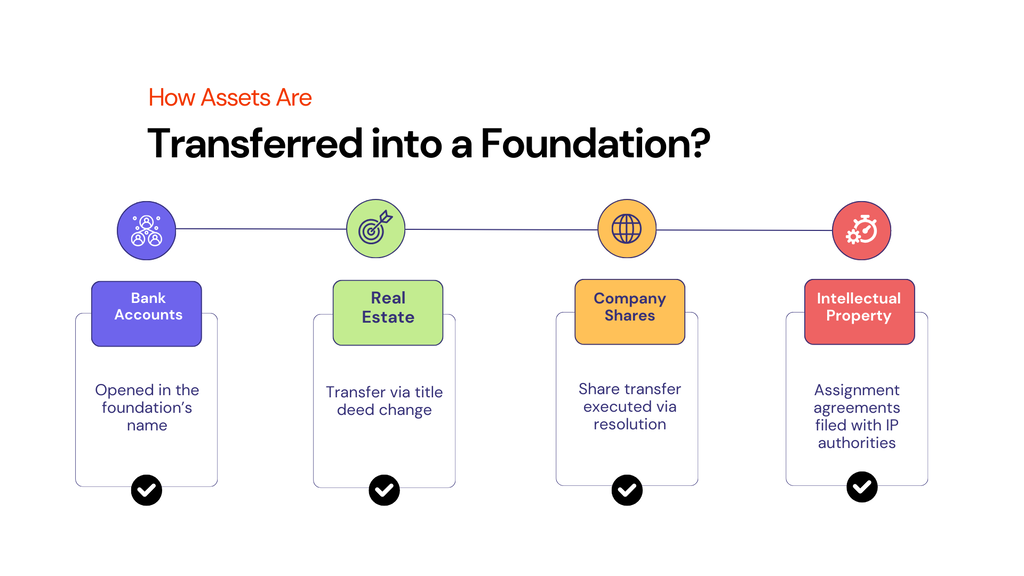
Asset transfer is an essential step in creating a functional foundation.
1. Bank Accounts
- Opened in the foundation’s name
- Require charter, council details, and resolutions
2. Real Estate
- Transfer via title deed change
- May require approval from the land department (Dubai, Abu Dhabi, etc.)
3. Company Shares
- Share transfer executed via resolution
- Must be updated in UBO records
4. Intellectual Property
- Assignment agreements filed with IP authorities
Example of Assets Held by a Family Foundation
To understand how a family foundation operates, consider a hypothetical scenario. A founder might transfer the following types of assets into a foundation:
- Real estate located in the UAE or abroad
- Shares in private or public companies
- Investment portfolios including stocks, bonds, and funds
- Bank deposits and cash holdings
- Intellectual property, such as patents or trademarks
- Art collections and other valuable assets
Family Foundation vs Holding Company
| Feature | Family Foundation | Holding Company |
| Purpose | Wealth preservation, governance, succession | Ownership and management of subsidiaries |
| Tax Status | Can apply for tax transparency | Subject to corporate tax unless QFZP |
| Ownership | No shareholders; controlled by charter | Owned by shareholders |
| Asset Protection | High | Moderate |
| Succession | Strong, automatic | Requires wills/share transfers |
| Flexibility | High for passive assets | High for business operations |
Family Foundation vs Trust
| Feature | Family Foundation | Trust |
| Legal System | Civil law & common-law hybrids | Mostly common law |
| Registration | Public legal entity | Private arrangement |
| Governance | Council/board | Trustees |
| Control | Founder retains more influence | Trustee-led |
| Succession | Built-in | Requires deed updates |
| Tax Transparency | Can apply for FTA recognition | Varies by jurisdiction |
DIFC vs ADGM Family Foundation
| Feature | DIFC Foundation | ADGM Foundation |
| Legal Framework | Based on English common law | Based on English common law |
| Regulatory Body | DIFC Registrar of Companies | ADGM Registration Authority |
| Governance Flexibility | Very strong | Very strong |
| Setup & Maintenance Cost | Slightly higher | Slightly lower |
| Popular Use Cases | HNW families with global structures | Family offices & SPVs |
| Tax Treatment | FTA rules apply equally | FTA rules apply equally |
Taxation of Family Foundations in the UAE
A UAE family foundation can apply for tax transparency under Article 17 of the Corporate Tax Law. When approved by the Federal Tax Authority, the foundation is not taxed as a separate entity. Instead, its income is passed directly to the beneficiaries, who are taxed based on their own status.
Since most foundations hold passive assets such as real estate, portfolios, and dividends, this income is often treated as personal investment income for natural persons. In many cases, this means the beneficiary may have no corporate tax liability on their share.
To qualify, the foundation must show that it manages assets, has identifiable beneficiaries, avoids active business activity, and meets substance requirements. This creates a clear and predictable tax framework that supports long term wealth planning in the UAE.
| Tax Feature | Standard Entity | Family Foundation with FTA Approval |
|---|---|---|
| Entity Level Tax | Pays corporate tax on income | No entity level tax, income flows to beneficiaries |
| Treatment of Passive Income | Taxed if from business activity | Often treated as personal investment income, usually not taxable for natural persons |
| Beneficiary Role | Not relevant | Beneficiaries are responsible for tax on their share |
| Eligibility | Automatic | Requires FTA approval and compliance with Article 17 |
| Active Business Activity | Allowed | Not allowed, risks losing transparency status |
How Can Juriszone Help You Set Up a Family Foundation?
Juriszone supports families and high net worth individuals through the entire setup process of setting up a family foundation in UAE. Our team designs the right foundation structure, prepares all legal and governance documents, and ensures full compliance with UAE regulatory and tax requirements. We help families transfer assets correctly, define beneficiary rights, and maintain ongoing governance standards.
With Juriszone, you can create a family foundation that protects your assets, provides clear succession rules, and supports long term financial continuity that aligns with the founder’s intentions.
Get Free Consultation: Discuss Pricing Today!
Written By

Senior Associate
Reading Duration:
10 Min Read

Private Foundations Setup in UAE: Guide (Tax Benefits, Setup, Costs)
Private foundations in the UAE provide tax-efficient wealth preservation for expat families. The UAE Corporate Tax Law introduced Family Foundation...

Charitable vs Non-Charitable Foundations in the UAE
A non-charitable foundation is established for private purposes and is the most prevalent type in the UAE. Its main functions...

Advanced wealth protection strategies UAE HNWIs [ Updated ]
Alan Wells Business Consultant